Beyond MQLs: Reframing success in B2B marketing
Survey Results
QUESTION 01
Do you currently employ an ABM approach in your marketing strategy?
Conclusion
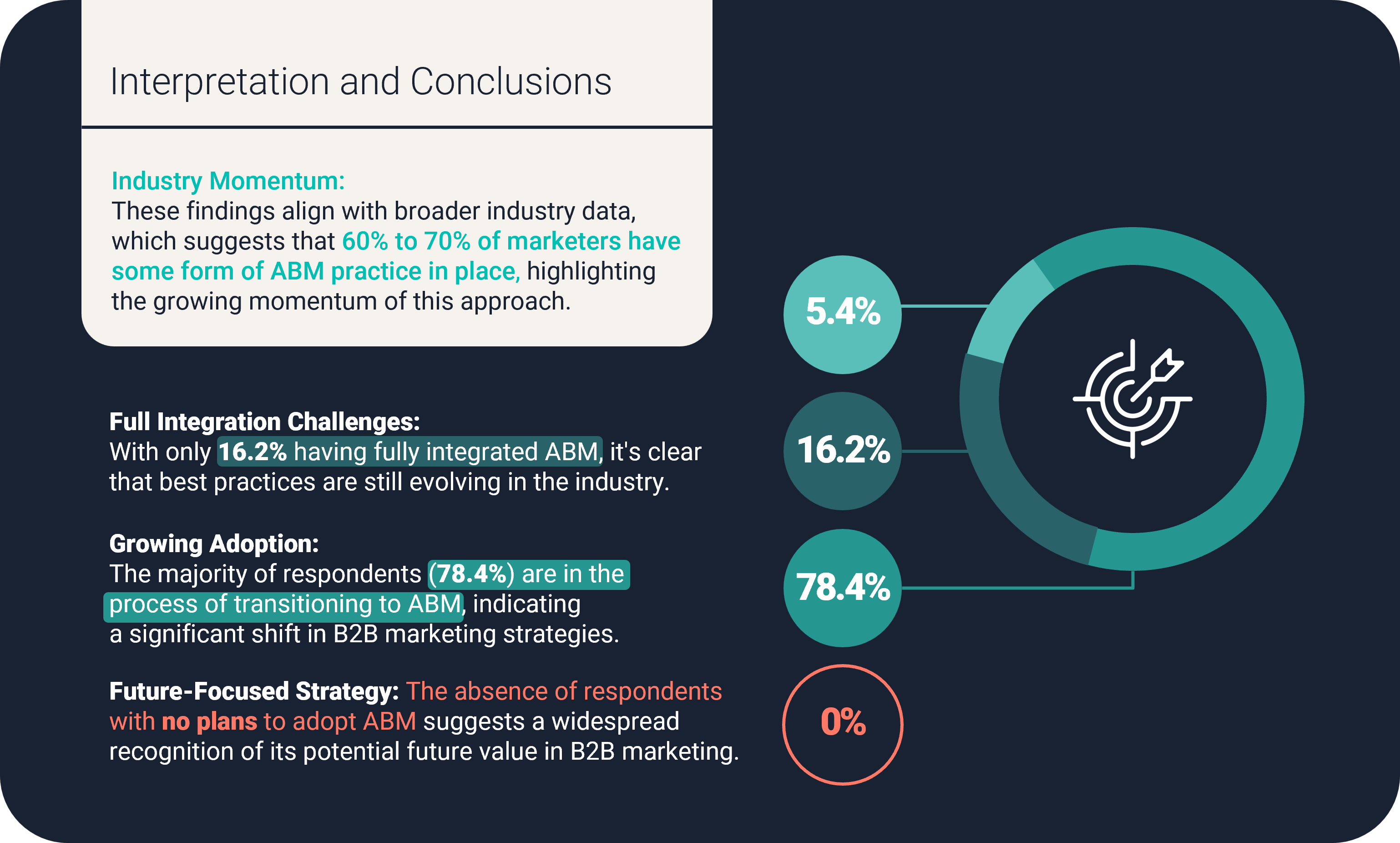
The data reveals that ABM, while gaining traction, is still a relatively new approach for most organisations. The high percentage of companies in transition reflects the nascent state of ABM adoption, indicating a period of experimentation and learning. As organisations gain experience, we can expect more refined strategies to emerge. This early-stage adoption aligns with broader industry trends, suggesting ABM is poised to become a standard B2B marketing approach as it matures.
QUESTION 01
Do you currently employ an ABM approach in your marketing strategy?
Conclusion
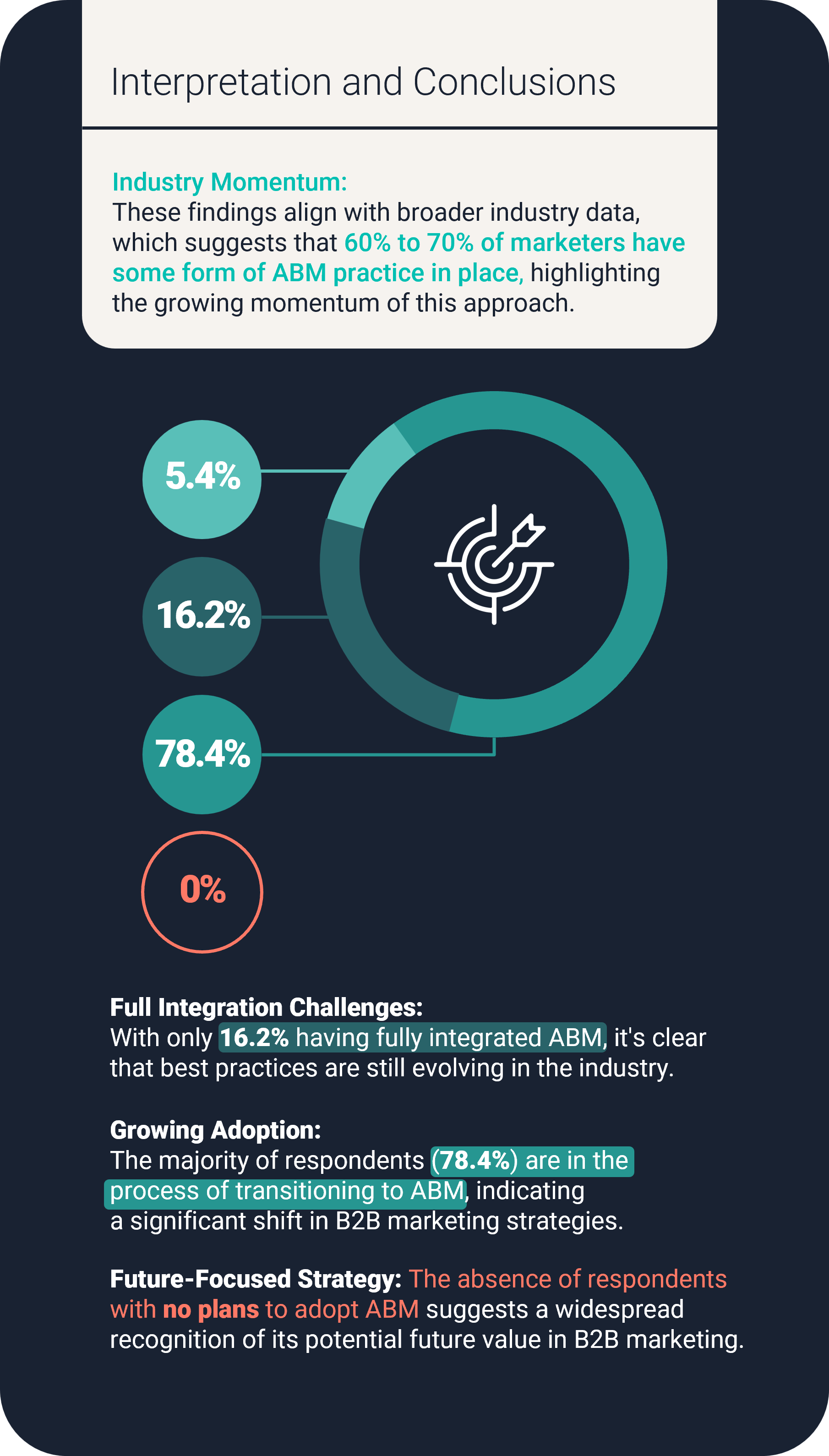
The data reveals that ABM, while gaining traction, is still a relatively new approach for most organisations. The high percentage of companies in transition reflects the nascent state of ABM adoption, indicating a period of experimentation and learning. As organisations gain experience, we can expect more refined strategies to emerge. This early-stage adoption aligns with broader industry trends, suggesting ABM is poised to become a standard B2B marketing approach as it matures.
QUESTION 02
Which metric do you think is most important in measuring marketing's impact?
Conclusion
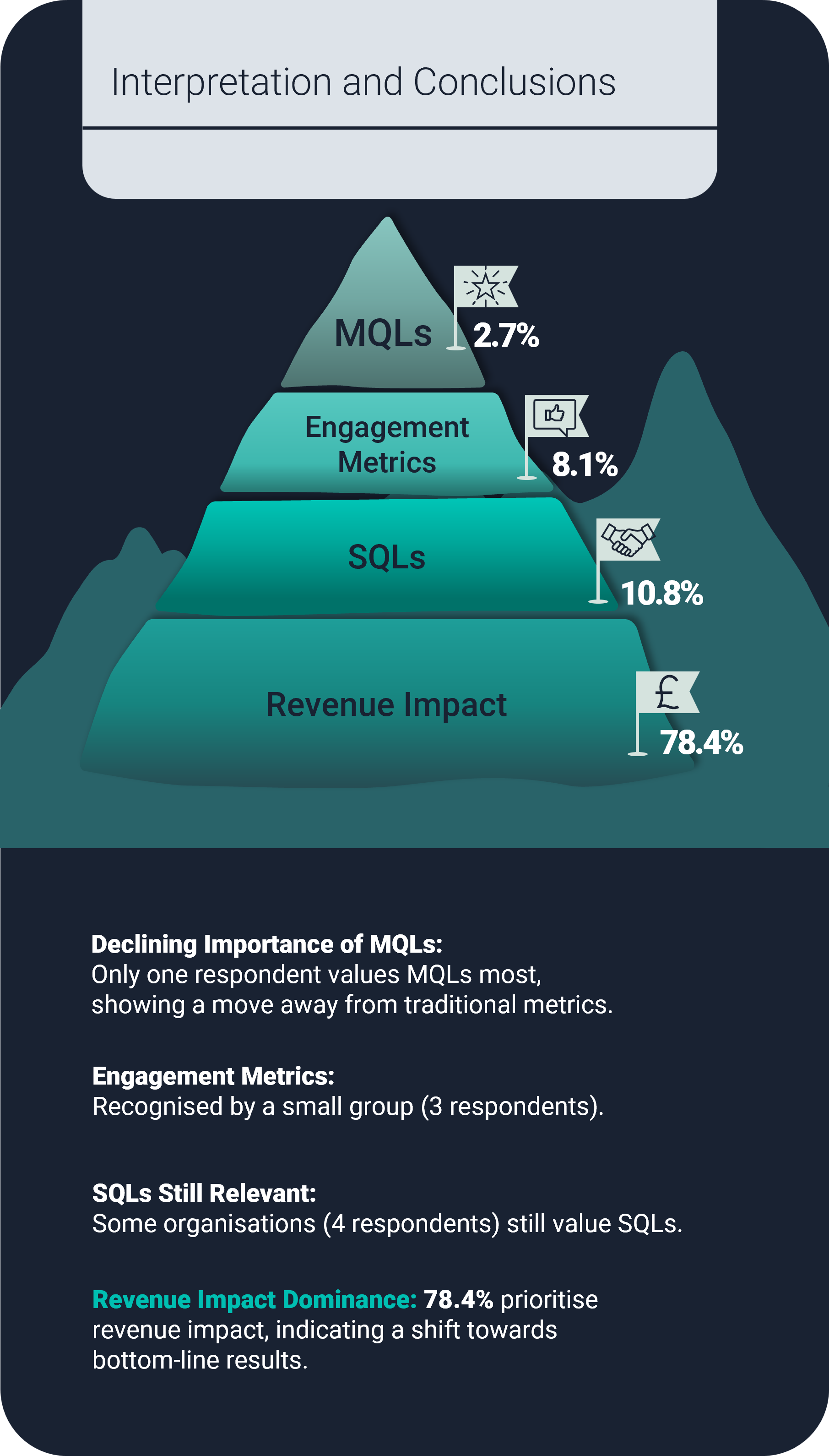
There's a strong focus on revenue contribution, aligning marketing more closely with overall business objectives and financial accountability.
While revenue contribution remains a primary focus, the low emphasis on engagement metrics (only 3 responses) reveals an opportunity for marketers to evolve their measurement strategies. As B2B buying journeys become more complex, engagement metrics can provide valuable insights throughout the buyer's journey. A balanced approach combining revenue impact with engagement metrics will likely offer a more comprehensive view of marketing's effectiveness and drive long-term business growth.
QUESTION 03
How do you typically identify target accounts to include in your campaigns? Pick the one you rely on most.
Conclusion
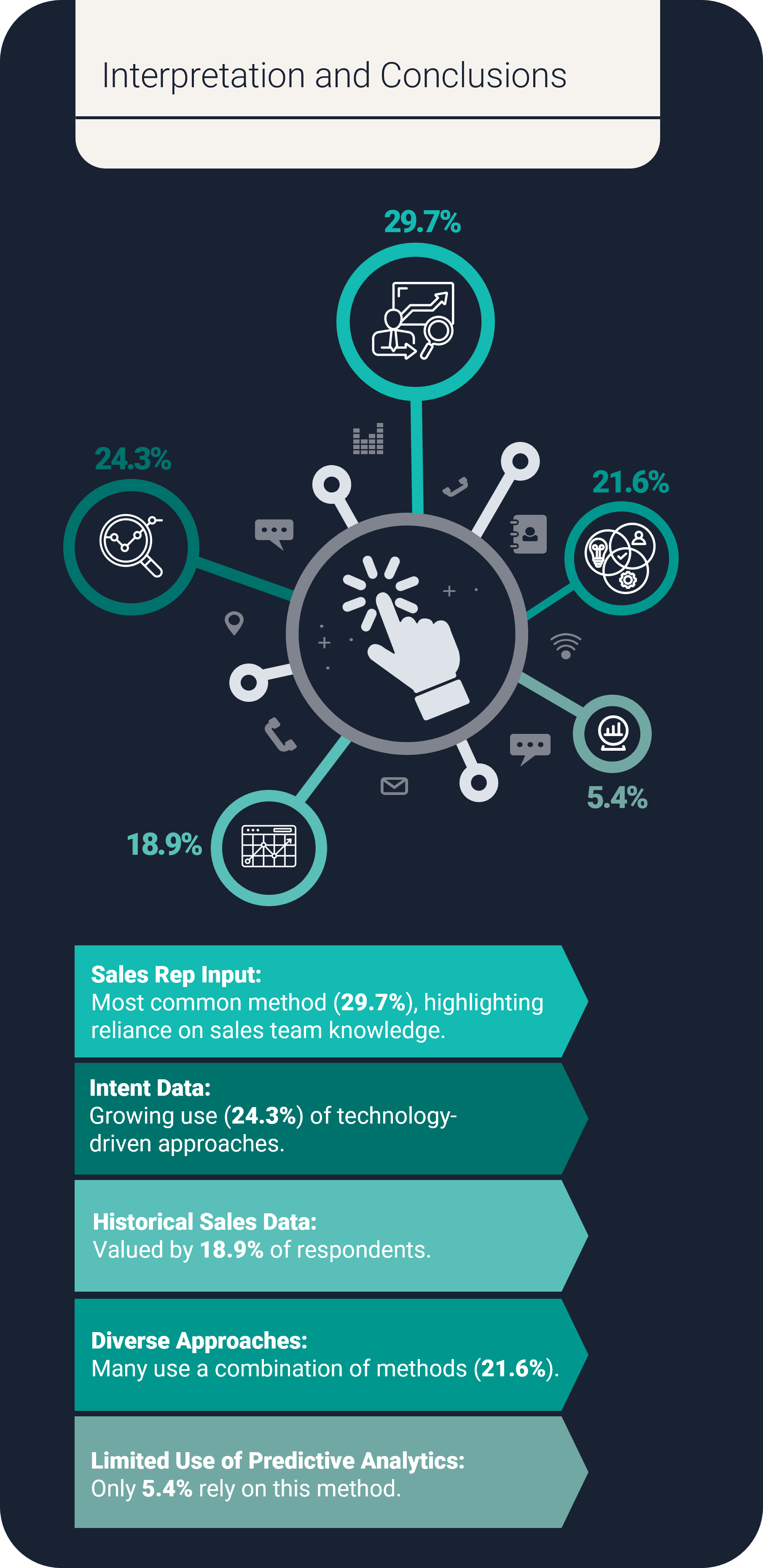
A mix of traditional and modern methods is used to identify target accounts, with a significant reliance on sales teams and increasing adoption of intent data.
Target account identification in B2B marketing now blends traditional and modern approaches, with sales input still crucial and intent data gaining traction. While promising, the prevalence of sales-selected accounts challenges marketers. To optimise strategies, marketers should collaborate closely with sales to prioritise in-market ICP accounts, while focusing on brand building to ensure top-of-mind status when potential accounts create vendor shortlists.
QUESTION 04
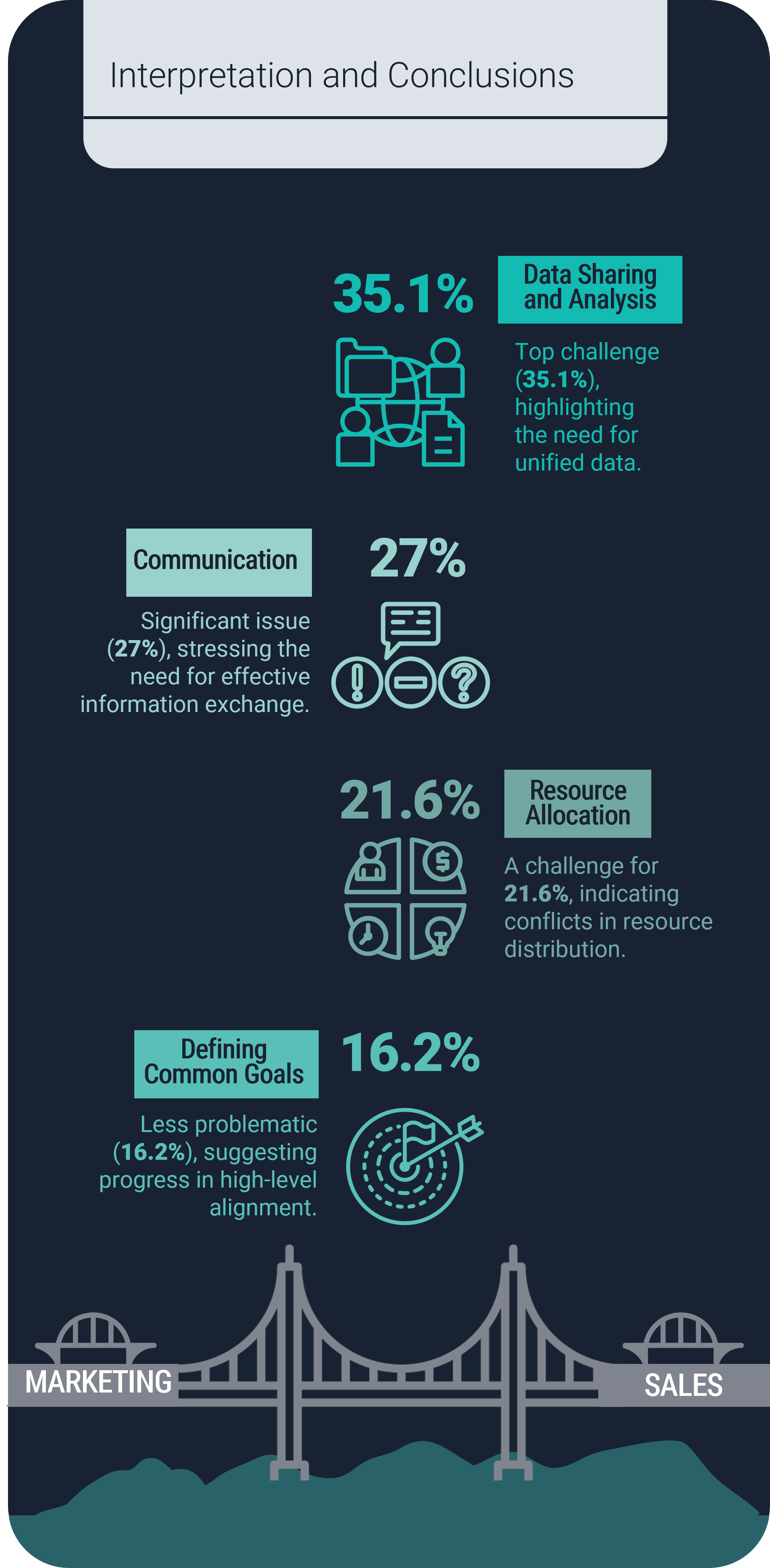
What's the biggest challenge in aligning marketing and sales at your organisation?
Conclusion
The survey underscores a persistent challenge in B2B marketing: the MQL handover process. Data sharing and communication issues stem from flawed lead qualification, undermining trust between sales and marketing. To optimise alignment, marketers should collaborate closely with sales to develop an impartial "sales readiness" assessment. This approach, blending traditional sales input with modern data-driven insights, can help bring teams together around a united front.
QUESTION 02
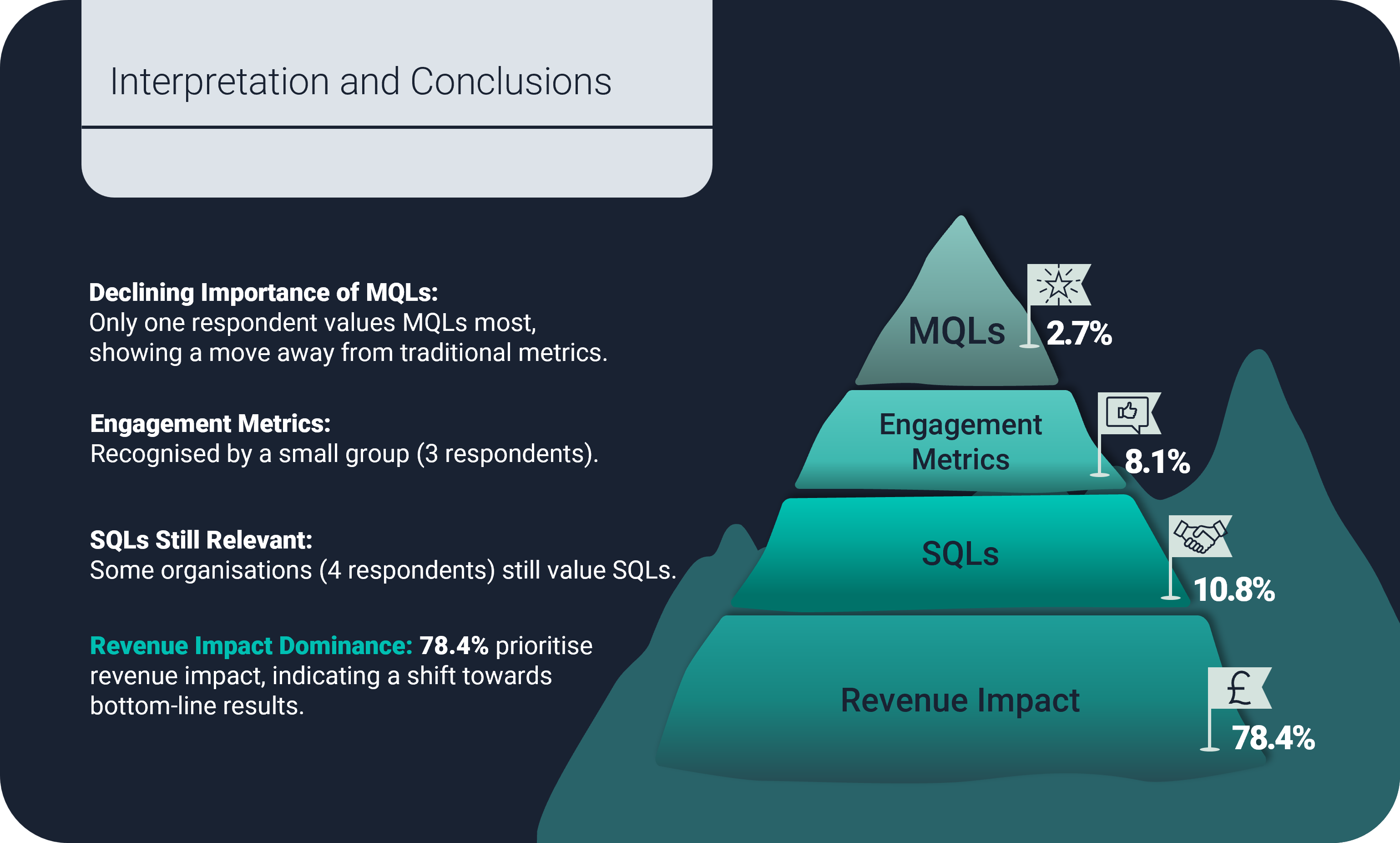
Which metric do you think is most important in measuring marketing's impact?
Conclusion
There's a strong focus on revenue contribution, aligning marketing more closely with overall business objectives and financial accountability.
While revenue contribution remains a primary focus, the low emphasis on engagement metrics (only 3 responses) reveals an opportunity for marketers to evolve their measurement strategies. As B2B buying journeys become more complex, engagement metrics can provide valuable insights throughout the buyer's journey. A balanced approach combining revenue impact with engagement metrics will likely offer a more comprehensive view of marketing's effectiveness and drive long-term business growth.
QUESTION 03
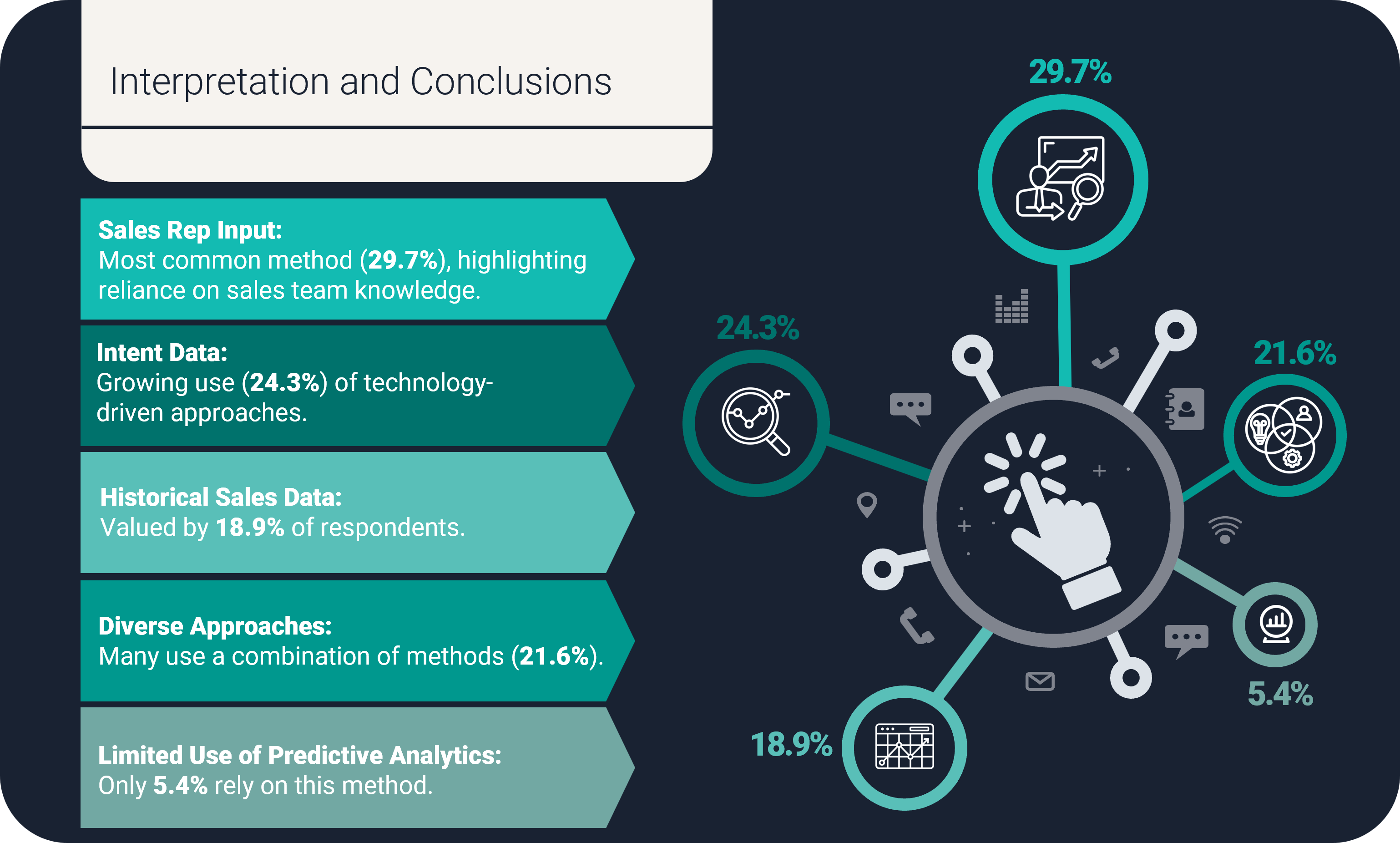
How do you typically identify target accounts to include in your campaigns? Pick the one you rely on most.
Conclusion
A mix of traditional and modern methods is used to identify target accounts, with a significant reliance on sales teams and increasing adoption of intent data.
Target account identification in B2B marketing now blends traditional and modern approaches, with sales input still crucial and intent data gaining traction. While promising, the prevalence of sales-selected accounts challenges marketers. To optimise strategies, marketers should collaborate closely with sales to prioritise in-market ICP accounts, while focusing on brand building to ensure top-of-mind status when potential accounts create vendor shortlists.
QUESTION 04
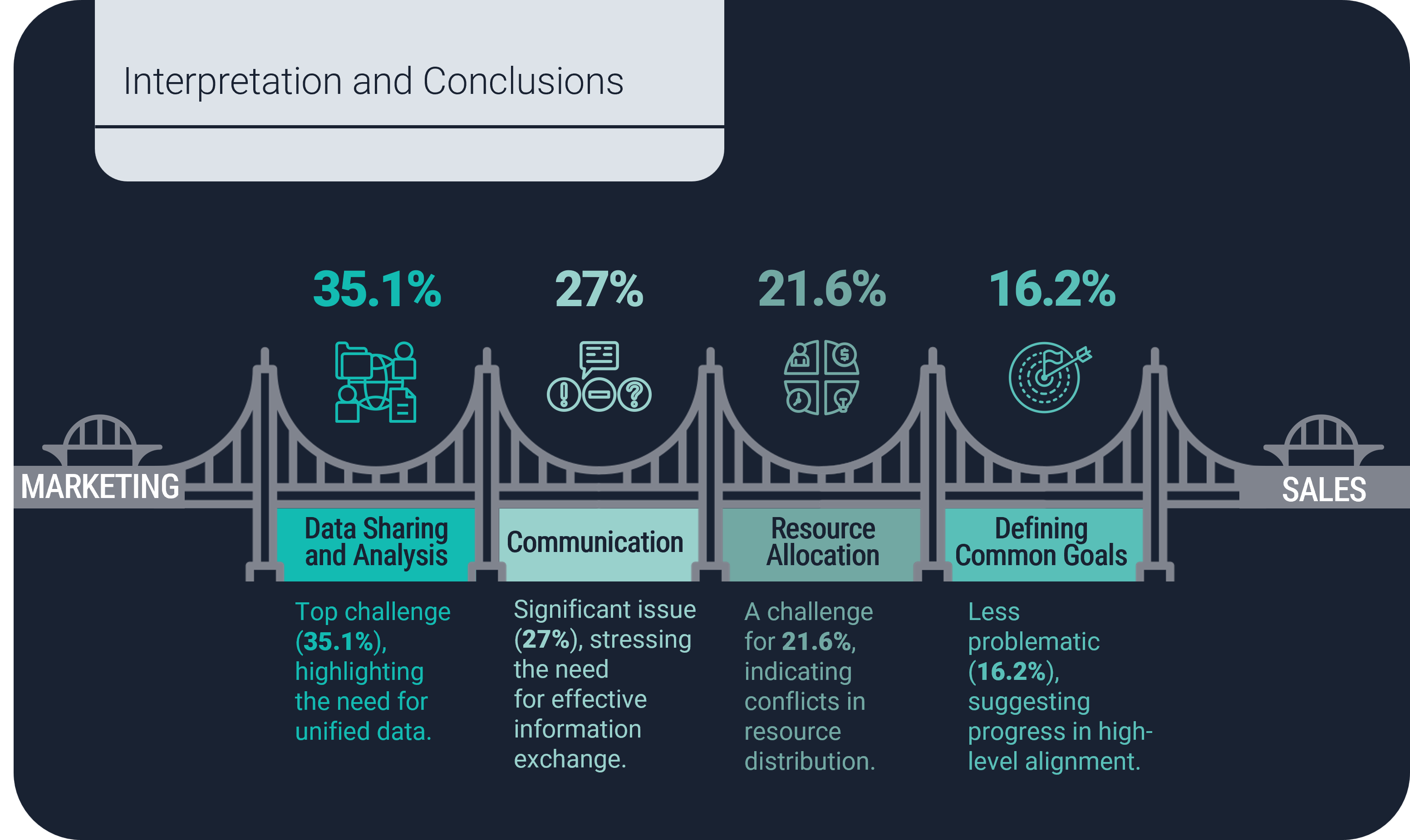
What's the biggest challenge in aligning marketing and sales at your organisation?
Conclusion
The survey underscores a persistent challenge in B2B marketing: the MQL handover process. Data sharing and communication issues stem from flawed lead qualification, undermining trust between sales and marketing. To optimise alignment, marketers should collaborate closely with sales to develop an impartial "sales readiness" assessment. This approach, blending traditional sales input with modern data-driven insights, can help bring teams together around a united front.

About 6sense
6sense is on a mission to revolutionise the way B2B organisations create revenue by predicting customers most likely to buy and recommending the best course of action to engage anonymous buying teams. 6sense Revenue AI is the only sales and marketing platform to unlock the ability to create, manage and convert high-quality pipeline to revenue. Customers report 2X increases in average contract value, 4X increases in win rate and 20-40% reduction in time to close deals. Know everything, do anything, with 6sense.